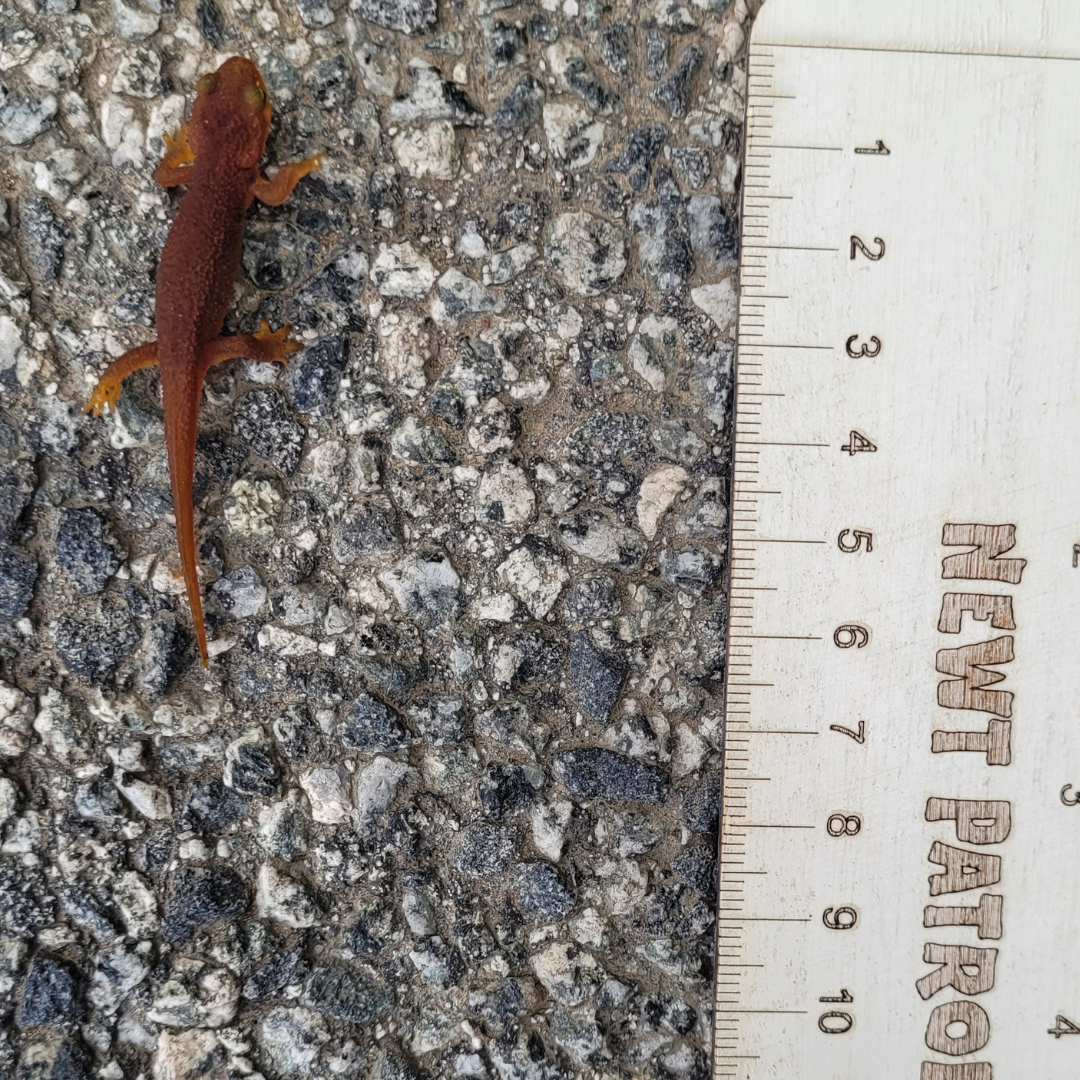
As we launch into the winter rainy season, you may see some of these adorable creatures on our trails.
The newt migration season starts in the fall in Northern California, and is triggered by the rainy season. During the summer, winter, and early fall seasons they are terrestrial, usually staying underground during the day, in forests, woodlands, and grasslands. Once the rainy season starts they migrate from their terrestrial habitat to a water source to breed and lay eggs. The breeding season usually lasts from late fall to end of spring. During and after the breeding season the adults and juveniles move back to their terrestrial habitats. The breeding season is when newts are at most risk of being hit by vehicles on the road. The juveniles are very small, and hard to see.
Best practices for biking around amphibians:
- Ride slowly and with caution, especially on rainy days. Heavy rains from November to March are the primary time for California newt migration. Slowing down gives you time to spot and avoid newts, which can be difficult to see on wet trails.
- Stay on designated trails. Keep your bike on marked paths to avoid disturbing or harming amphibians and other sensitive wildlife in the surrounding habitat.
- Avoid muddy trails. Riding on muddy trails can damage the ecosystem and potentially harm amphibians.
- Look ahead and watch the ground. Since newts are small and blend in with the road, constantly scanning the trail in front of you is essential.
- California newts secrete a powerful neurotoxin (tetrodotoxin) through their skin that can be harmful to people if the toxin is ingested. If you need to pick them up to move them off the trail, please wipe your hands on grass or a piece of fabric that you will launder later, and wash your hands after your ride.
- Do not pollute. Maintaining a healthy freshwater habitat is essential for newt populations. Avoid contaminating waterways with trash or other pollutants.
- Be especially careful around Alma Bridge Road. The road near Lexington Reservoir is a known, high-casualty amphibian crossing, where thousands of newts have been killed on the road during their annual migration. Midpeninsula Regional Open Space District has initiated the Newt Passage Project to address this issue, but no crossing structures have been implemented yet.
- Heed “Newt Crossing” signs. If you see signage warning of amphibian migration, take extra care to slow down and stay alert. Some organizations and communities, like the Chileno Valley Newt Brigade, organize volunteer patrols to help newts cross the road, similar to the effort needed on Alma Bridge Road.
Why newts need your protection:
- Critical ecosystem indicators: Newts and other amphibians serve as indicator species. Their presence and health provide clues about the overall health of the environment, making their protection important for the entire ecosystem.
- Significant threats: Roads and vehicle traffic pose a major threat to migrating amphibians, contributing to local extinction risk by dissecting their habitats.
- Annual migration: Newts have a strong homing instinct, returning to the same breeding ponds every year. This behavior puts them at high risk when their migratory paths cross roadways.
PLACES WHERE NEWTS HAVE BEEN DOCUMENTED
SANTA CLARA COUNTY:
Sierra Azul Open Space Preserve
Bear Creek Redwoods Preserve
Pichetti trails
Stevens Creek watershed: specifically on a tributary at Midpen property and at Dipper
Ranch
Los Gatos Creek/Lexington Reservoir area
Coyote Valley Open Space Preserve
Sanborn County Park
Rancho Canada del Oro Open Space Preserve
Calero County Park: near Cherry Canyon Creek and Calero Reservoir within the
Rancho SanVicente Loop
Lexington Reservoir: any of the trails near the Reservoir
SANTA CRUZ COUNTY:
Henry Cowell Redwoods State Park
The Forest of Nisene Marks State Park
Mindego Hill Trail
Alpine Road near the Ancient Oaks Trail
Mt. Umunhum Road
Wilder Ranch State Park
Big Basin Redwoods State Park: along Waddell Creek